In the name of God, the Most Gracious, the Most Merciful
Your Excellency, the President of the Republic, Dr. Fuad Masoum
Your Excellency, the Prime Minister, Dr. Haider al-Abadi
Your Excellency, the Head of the Judiciary, Dr. Medhat al-Mahmoud
Your Excellency, the First Deputy Speaker of Parliament, Sheikh Humam Hamoudi
Honorable Members of Parliament
Your Excellencies, Your Highnesses, and all attendees, including guests of Iraq, academics, specialists, and the esteemed public
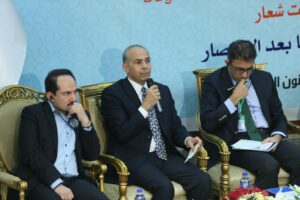
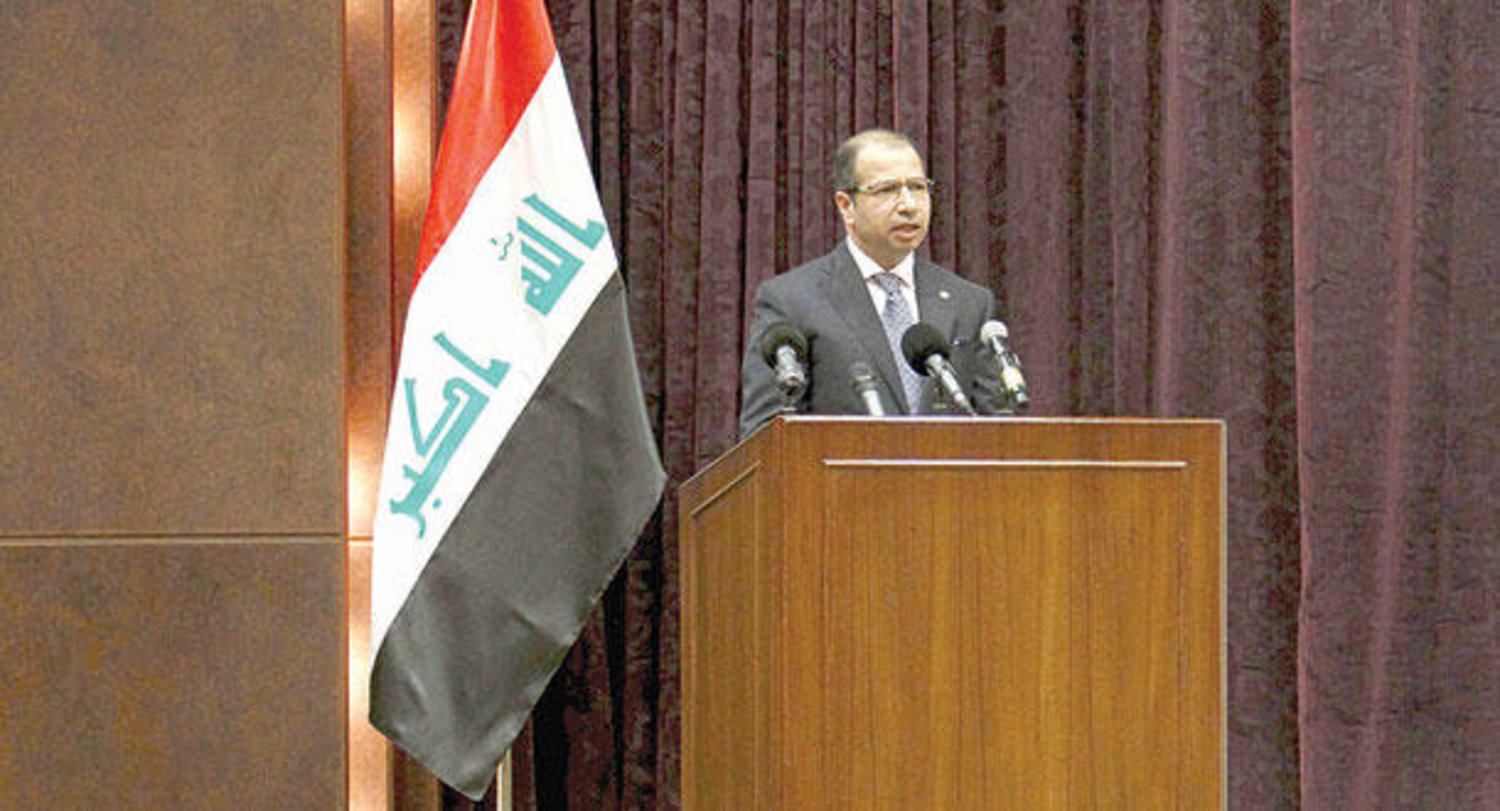
At the outset, I extend my sincere thanks to the Iraqi Institute for Intellectual Dialogue for this kind invitation, and to the Preparatory Committee and those responsible for this conference, for granting us this important opportunity at this significant gathering. Its importance stems from its title, its theme, its participants, the current stage of its convening, and the topics it addresses. Its distinctive title, “Baghdad Dialogue,” makes it a national dialogue originating from the capital of thought, culture, and science—Baghdad—with a purely patriotic spirit and the participation of our brothers and friends among thinkers and decision-makers. This presents us with an opportunity to reach profound conclusions. For such unconventional dialogues, which are meant to clarify matters and dispel ambiguity through frankness, clarity, transparency, realism, addressing the wounds, and working with sincerity to chart the course for the post-victory phase we anticipate in the coming period.
Ladies and gentlemen,
We have spent a long time engaging in dialogue, holding conferences, and exchanging views on our Iraqi problem, without establishing a clear timetable for what has been accomplished, agreed upon, and incorporated into a clear roadmap. It is as if we are going around in circles, repeating the same topics. This necessitates greater seriousness in moving beyond the points of agreement to the next stage, lest the issues become confused and time be wasted rehashing what has already been achieved. This has hampered our dialogues throughout the past period and distracted us greatly from the necessary steps in the next phase. Therefore, I hope that a Supreme Council for National Dialogue will be formed, tasked with overseeing these gatherings, documenting the achievements, and converting them into a final, overarching document to be called the “Comprehensive National Dialogue Document.” This council would then propose any remaining points of discussion for subsequent gatherings to avoid repeating what has already been agreed upon.
Distinguished guests,
It is good that we are meeting today to discuss the post-victory phase, which indicates our confidence in victory and that it is now within reach. I believe this feeling stems first from our faith in God, and then from the national consensus on the righteousness and justice of this great struggle and confrontation against terrorism. It also stems from our high confidence in the capabilities of our heroic forces—the army, police, Popular Mobilization Forces, tribal forces, Peshmerga, and all the groups standing shoulder to shoulder on the battlefield to defend the honor, land, and dignity of the nation. Furthermore, the world’s support for us in this crucial humanitarian battle and the international community’s conviction of the necessity of supporting and assisting us in it—all of this represents a significant achievement for Iraq during the past period, and indeed, it is a great deal.
Ladies and gentlemen,
The role of neighboring countries and regional actors in Iraqi affairs cannot be ignored. This role, of course, falls into three main categories. The first is a necessary role: supporting our forces through official channels with weapons, ammunition, and intelligence. This is something we are committed to now and will continue to be, and it is an essential right for Iraq. The bilateral agreements that bind us to these neighboring countries obligate them to stand with us and support us. The second role is absolutely unacceptable, both now and in the future. I am referring to the support provided by some parties to terrorist organizations and entities, offering them facilities and justifications, assisting them in every way, and using them as a means of exerting pressure on Iraq or any regional party involved in the conflict. This role pushes these groups to fight by proxy for political score-settling and to achieve other economic or strategic objectives related to influence and hegemony. There is a third role, which has been overlooked for some time due to the circumstances and complexities of the current situation. This is a temporary silence stemming from prioritizing self-interest, and it will not last long. I will be frank in identifying this role: the presence of entities on our land or in our airspace, for one reason or another, that we believe our circumstances and capabilities are currently insufficient to address. Because we oppose it and because we face a great danger, namely ISIS, and when ISIS is defeated, we will be frank with those who stood with us and helped us fight it by demanding the end of all manifestations of its presence.
Distinguished guests,
Undoubtedly, we are required to review all previous procedures regarding the form of the administrative system that has been followed over the past 14 years and try to find a new model of administration that is consistent with the constitution and in line with the existing regulations and laws, including Law 21 for Provincial Councils. I believe that supporting decentralization is one of the most important necessities for the next stage. Among the forms and methods of supporting decentralization is a system of regions at the provincial level only, without the demographics of the population in these regions influencing the form of these regions. Perhaps pursuing these options is the best way to preserve the unity of Iraq and protect it from any attempts to divide it along sectarian or ethnic lines.
Distinguished Conference Members,
A difficult phase awaits us, one that demands national unity and harmony. This is a phase of peaceful coexistence among the sons of our one nation, following the deep wounds inflicted by terrorism. It requires resolving all the social problems caused by the infiltration of terrorism into many Iraqi provinces, as well as the societal and infrastructural devastation resulting from this occupation. All of this necessitates decisive steps from decision-makers, encompassing two phases. The first phase involves the return and compensation of displaced persons, the establishment of stability, and the preservation of diversity. The second phase entails the comprehensive reconstruction of the infrastructure in these areas to make them habitable again, after terrorism destroyed most aspects of urban development. This requires a comprehensive reform plan, for which the executive authorities must present a vision. The Council of Representatives will support all these steps, particularly regarding the legislation required.